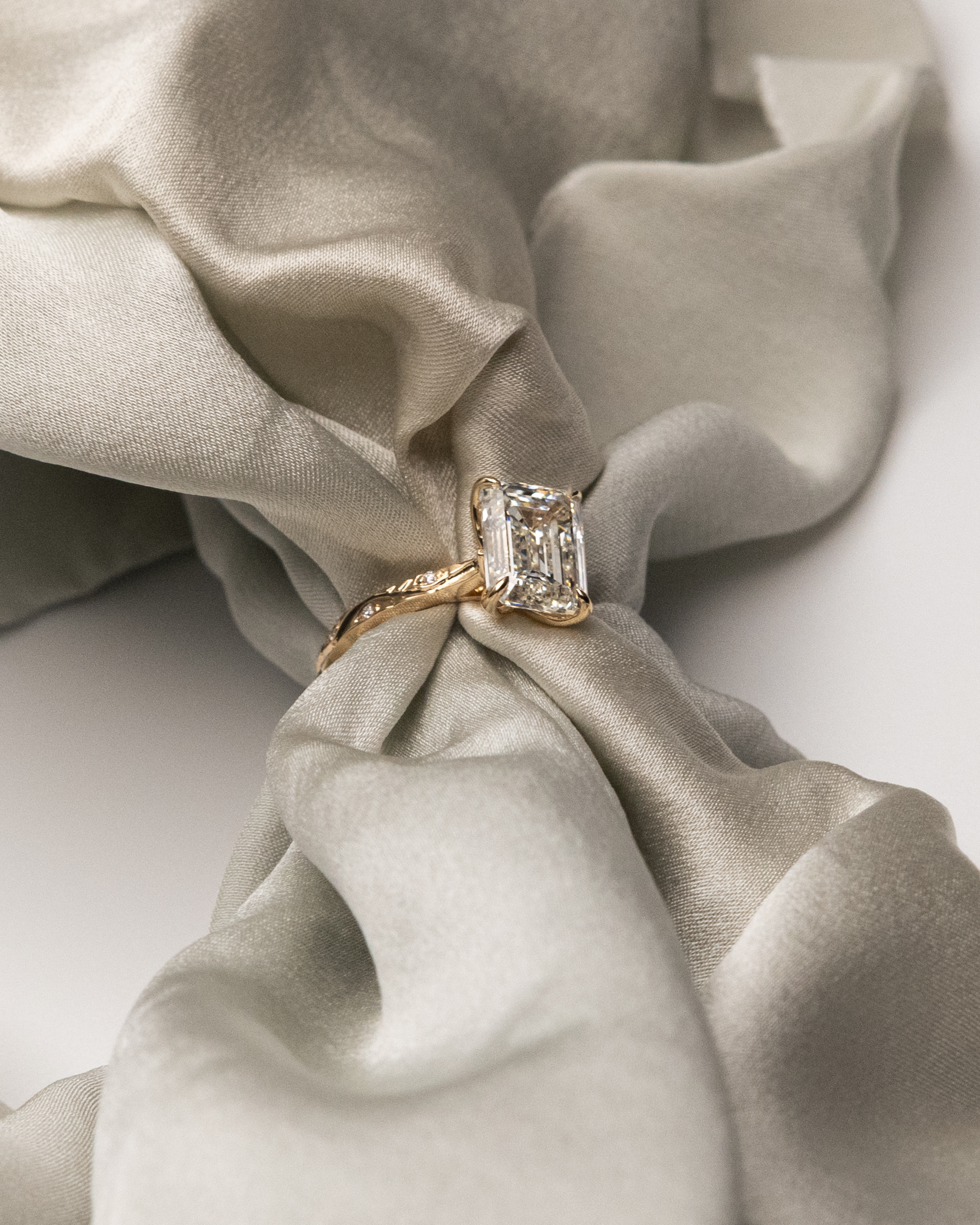
The question most buyers ask first — “is a lab grown diamond real?” — is usually shorthand for a deeper concern: is it fake, is it lesser, is it a different material posing as something it isn’t? The answer is no to all three. A lab-grown diamond is a diamond. It is not a simulant, not a substitute, and not a diamond-like material. It is carbon arranged in the diamond cubic crystal structure, with the same chemical, optical, and physical properties as a natural diamond.
The Gemological Institute of America grades lab-grown diamonds using the same standards and report formats as natural stones. In 2018, the Federal Trade Commission updated its Jewelry Guides to remove the word “natural” from the definition of a diamond, recognizing that origin does not determine whether a material is a diamond.
This guide covers the scientific and practical answer to whether lab-grown diamonds are real, what distinguishes them from natural diamonds, how they are graded, and what that means for someone buying a stone for a custom piece.
Key Takeaways
- Lab-grown diamonds are chemically, physically, and optically identical to natural diamonds — same carbon crystal structure, same hardness (10 Mohs), same refractive index (~2.42).
- The FTC removed “natural” from the definition of a diamond in 2018, recognizing that origin does not determine whether something is a diamond.
- GIA and IGI grade lab-grown diamonds on the same 4Cs scale — cut, color, clarity, and carat — using identical criteria to natural diamonds.
- Standard gemological tools cannot distinguish a lab-grown from a natural diamond. Specialized spectroscopic equipment is required to determine origin.
- The meaningful differences are origin, price, and resale dynamics — not physical or optical properties.
What Makes a Diamond a Diamond?
A diamond is defined by what it is, not where it comes from. At a material level, a diamond is pure carbon arranged in a specific atomic structure known as the diamond lattice. That structure is what gives diamonds their defining properties:
- Hardness of 10 on the Mohs scale
- Refractive index of approximately 2.42, producing brilliance and fire
- Extremely high thermal conductivity
- Variable natural inclusions — ranging from internally flawless to heavily included depending on growth conditions
If a stone has this structure, it is a diamond. Origin does not change that definition.
A lab-grown diamond has this exact same atomic structure. That is why it is considered a real diamond. It is not a substitute and not a different material.
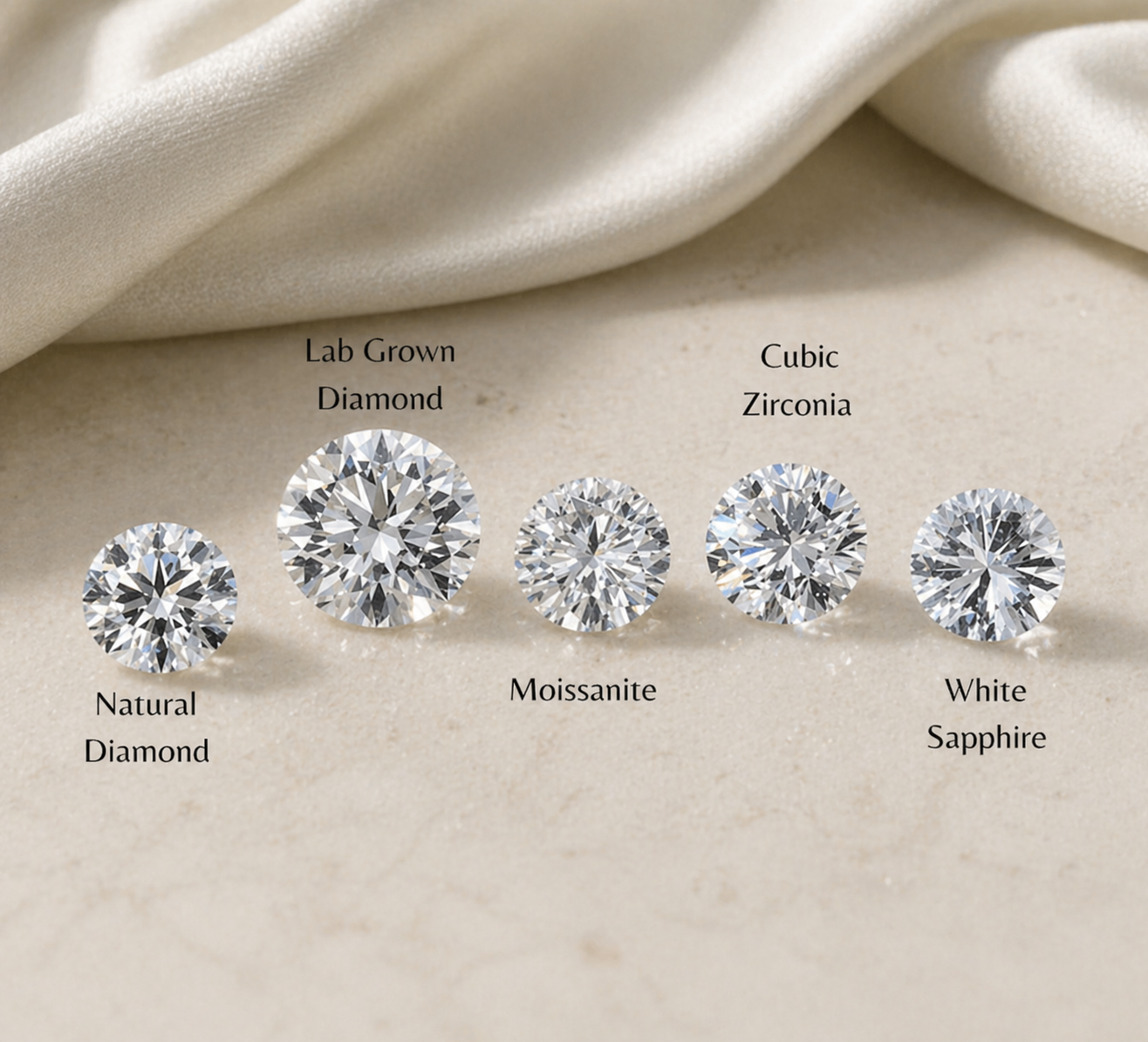
Confusion typically comes from comparison to diamond simulants. Materials such as cubic zirconia and moissanite can resemble diamonds visually, but they are entirely different substances. They have different chemical compositions, different crystal structures, and different optical behavior.
The distinction that matters is simple:
- Diamonds are defined by chemistry and crystal structure
- Natural diamonds are defined by geological origin
A lab-grown diamond fully meets the definition of a diamond. The only difference is that it was formed in a controlled environment rather than over billions of years beneath the earth’s surface.
Diamonds that look like diamonds but are made of different materials are called simulants. Cubic zirconia, moissanite, and white sapphire are all simulants — different materials that can resemble diamonds visually. Lab-grown diamonds are not simulants. They are the same material as natural diamonds, grown via a different process. The distinction is significant and often misunderstood in everyday conversation.
How Are Lab-Grown Diamonds Made?
There are two methods used to grow diamonds in a laboratory: HPHT (High Pressure High Temperature) and CVD (Chemical Vapor Deposition). Both produce genuine diamonds with the same crystal structure as natural stones. They differ in how they replicate the conditions that create diamonds.
HPHT mimics the conditions found deep in the earth — temperatures above 1,400°C and pressures exceeding 5 gigapascals — applied to a carbon source and a diamond seed crystal. The extreme environment causes carbon to crystallize around the seed in the same diamond lattice structure as a natural stone.
CVD grows diamonds layer by layer from a carbon-containing gas (typically methane) at much lower pressures. Microwave energy breaks down the gas, freeing carbon atoms that deposit onto a seed crystal and build up the diamond structure over weeks.
Both methods are used commercially, and both produce diamonds graded on the same 4Cs as natural stones. Some lab-grown diamonds begin as HPHT seed crystals and are then grown further using CVD, so the two processes are not mutually exclusive. While each method creates slightly different internal growth patterns, these differences are not visible to the eye or under a standard loupe. Identifying whether a diamond was grown using HPHT or CVD requires specialized spectroscopic analysis performed in a grading laboratory.
Both methods can produce high-quality diamonds across the full range of color and clarity grades, so neither is inherently “better.” HPHT stones are more likely to appear colorless out of growth but can sometimes show a slight blue nuance due to trace elements like boron. CVD stones often start with a faint brown tint that is typically removed through post-growth treatment, resulting in colorless finished stones. From a clarity standpoint, both can produce eye-clean diamonds, though the types of inclusions and growth patterns differ and are only relevant under magnification. In practice, visible quality is determined far more by the individual stone than the growth method.
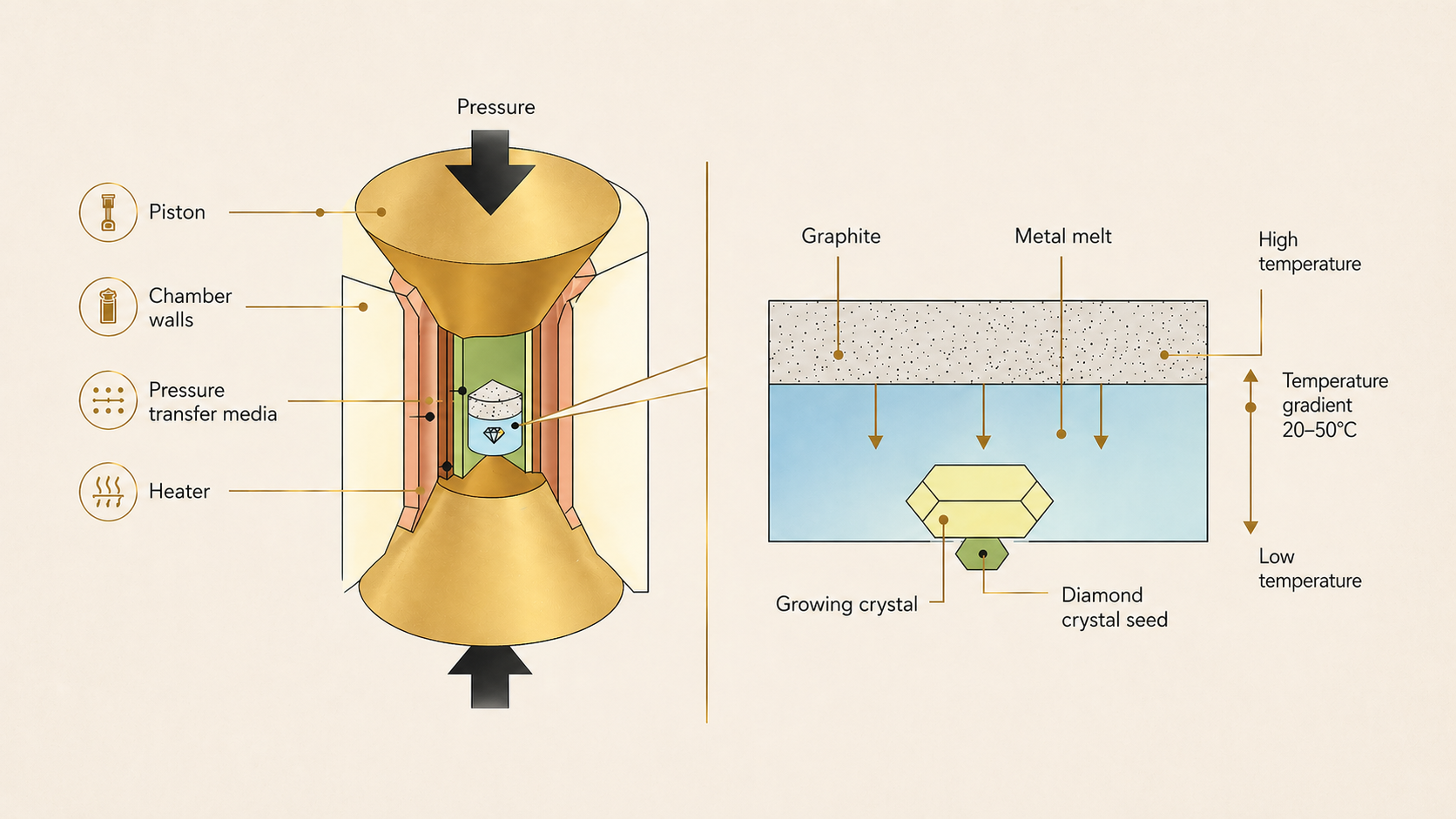
- HPHT: extreme heat + pressure applied to a carbon source and seed crystal. Mimics geological conditions.
- CVD: carbon gas broken down by microwave energy; atoms deposit onto a seed crystal layer by layer.
- Both produce diamond. Both are graded identically to natural stones by GIA and IGI.
- HPHT tends to produce stones with a slightly different internal growth pattern, but this is detectable only with spectroscopic equipment — not visually.
What Is Identical — and What Is Actually Different
The clearest way to answer “are lab grown diamonds real” is to separate what is identical from what genuinely differs. Most of the confusion comes from conflating the two.
Can a Gemologist Tell the Difference?
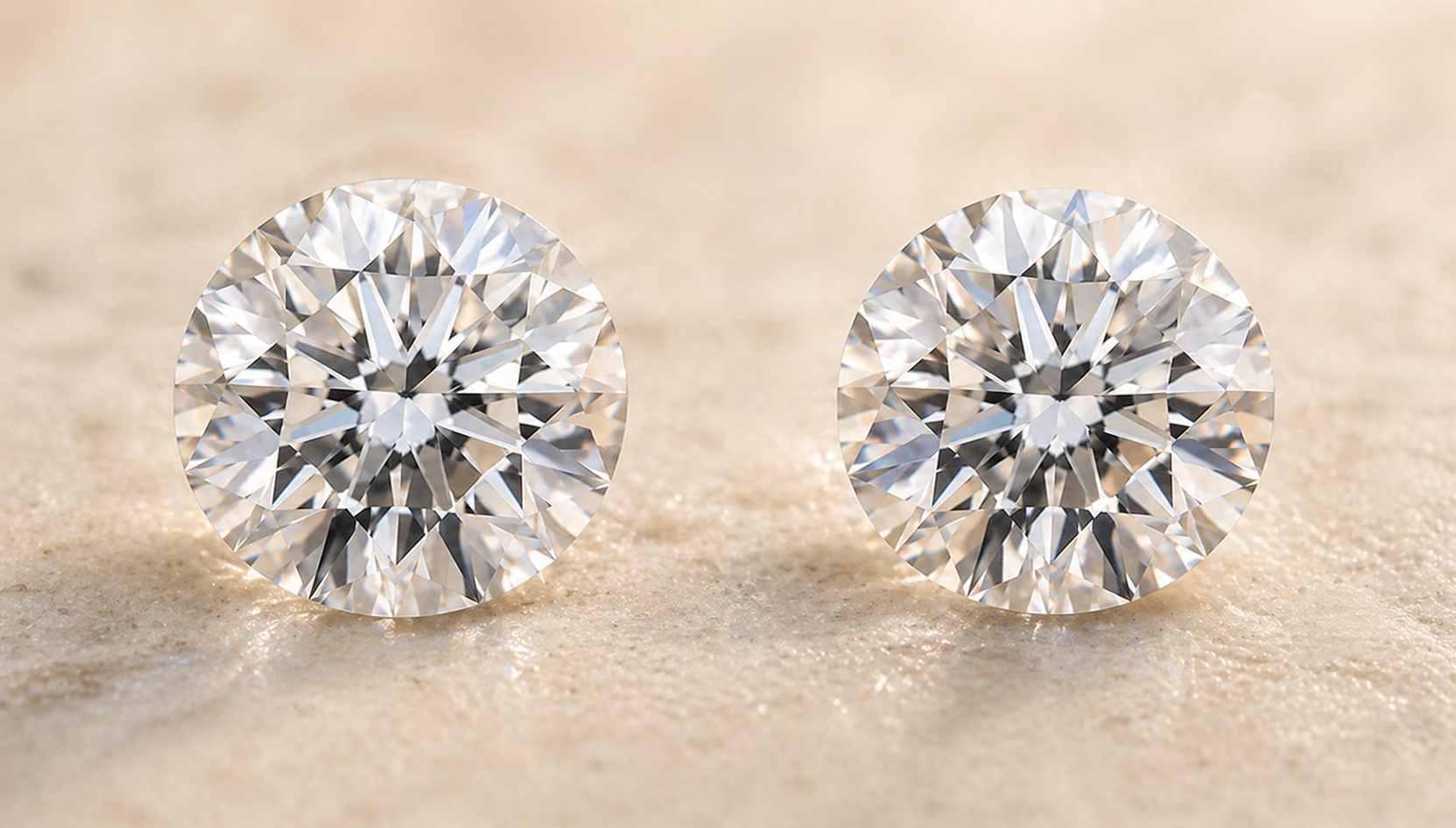
A trained gemologist with a standard loupe or microscope cannot tell a lab-grown diamond from a natural diamond by visual inspection alone. The two are physically indistinguishable under normal gemological examination. Even experienced professionals cannot determine origin by looking at the stone.
The distinction requires specialized equipment. GIA and IGI use advanced spectroscopic instruments — UV fluorescence testing, infrared spectroscopy, photoluminescence analysis — to identify growth patterns that differ between natural and lab-grown stones at the atomic level. These patterns are not visible to the eye, or even under a 10x loupe. They require the precision analysis performed only in a grading laboratory.
This is worth stating plainly: if you hand a lab-grown diamond to a jeweler without disclosing its origin, they will not be able to determine its origin from visual inspection. Some diamond testing instruments available in retail settings can detect differences in UV fluorescence, and there are handheld devices marketed specifically to identify lab-grown diamonds — but these are specialized tools, not standard equipment. A loupe cannot make this determination. A basic thermal conductivity tester confirms the stone is a diamond; it cannot confirm whether it is natural or lab-grown.
The grading report is the definitive record of origin. All GIA and IGI reports for lab-grown diamonds explicitly state the stone’s laboratory-grown origin, and the girdle is typically laser-inscribed with a “Laboratory Grown” designation. When you purchase a lab-grown diamond from a reputable source, the report — not visual inspection — is the declaration of what you have.
Grading: Same Standards, Same Labs
GIA and IGI both grade lab-grown diamonds on the same 4Cs criteria used for natural diamonds: cut, color, clarity, and carat weight. The grade descriptors are identical. A G color lab-grown diamond has the same measurable color characteristics as a G color natural diamond. A VS1 clarity lab-grown diamond has the same inclusion characteristics as a VS1 natural diamond. Grading is grading — the origin of the stone does not change what the grade means.
IGI is currently the most widely used grading laboratory for lab-grown diamonds in the custom jewelry market, and it issues full grading reports for both natural and lab-grown stones. GIA also grades lab-grown diamonds and began issuing full grading reports for them in 2023. For most buyers working with a custom jeweler, an IGI-graded lab-grown diamond with a full report is the standard — the same format you would receive for a natural stone.
One note on grade consistency: as with natural diamonds, grading stringency varies somewhat between labs. GIA tends to be the more conservative standard; an IGI VS1 and a GIA VS1 may not always describe the same stone. This applies to both natural and lab-grown categories.
GIA and IGI reports for lab-grown diamonds show the same information as natural diamond reports: cut, color, clarity, carat weight, shape, proportions, and a plot of inclusions if applicable. The report will note “Laboratory Grown” as the origin. The girdle of the stone is typically laser-inscribed with the report number and “Laboratory Grown” to ensure traceability. These designations exist for transparency — not because the stone is lesser in any material sense.
The Price Difference — and What It Means in Practice
Lab-grown diamonds currently cost 60–80% less than comparable natural diamonds. A 1.00ct round brilliant, G color, VS1 clarity, Excellent cut natural diamond might retail for $5,000–$7,000. A stone with identical grades in a lab-grown origin typically retails for $800–$1,500. The gap is meaningful at every size and grade.
This price difference has widened substantially over the past decade. As CVD and HPHT production technology has scaled and efficiency has improved, lab-grown diamond prices have fallen significantly — some industry estimates place the decline at over 80% since 2016. Natural diamond prices have remained relatively stable over the same period, reflecting finite geological supply and ongoing demand. The result is a growing divergence between the two markets.
What the price difference enables in practice:
- A buyer with a fixed budget can access substantially higher grades — or a larger carat size — in lab-grown versus natural.
- A buyer who values geological rarity, or who anticipates eventual resale, may prefer natural despite the higher cost.
- A buyer for whom the design, metal, and craftsmanship are the primary investment — and the diamond is a component of that design — often finds lab-grown the more rational choice for how the piece will look and last.
One consideration worth understanding: lab-grown diamond prices have continued to fall as production has scaled, and there is no clear floor in sight. A lab-grown diamond purchased today may be worth meaningfully less on the secondary market than its purchase price — not because it changed, but because the market price of equivalent stones fell further. Natural diamonds are not immune to price changes, but their supply is finite in a way lab-grown supply is not. Neither category should be purchased with resale in mind; both are illiquid assets that typically return less than retail price. But if resale is a consideration at all, it is a point in favor of natural.
Whether you’re leaning toward lab-grown or natural, we source both and can walk you through the tradeoffs for your specific design and budget. Start the conversation.
Are Lab-Grown Diamonds More Ethical?
The ethics of lab-grown versus natural diamonds are often presented in overly simple terms. The reality is more nuanced.
Lab-grown diamonds avoid many of the concerns associated with mining, including land disruption, community displacement, and conflict-related supply chains. At the same time, diamond growth is energy-intensive. According to JCK, even the most efficient growers use 250 kWh per carat — equivalent to 8.7 days of electricity for the average U.S. household, or enough to fully charge a Tesla two and a half times. Most facilities use closer to 750 kWh per carat. By comparison, a 2011 ABN Amro report cited in the same article found that mining a diamond requires approximately 57 kWh per carat. When lab-grown production relies on fossil fuel energy, its carbon footprint can substantially exceed that of mined diamonds — a result that runs counter to the common assumption.
Natural diamonds raise a different set of considerations. Mining has environmental impact by definition, but the industry today operates under significantly stricter regulations and traceability standards than it did historically. Many producers emphasize responsible sourcing, land rehabilitation, and community investment, though practices vary by region and operator.
There is no single answer that applies in every case. A lab-grown diamond produced using renewable energy may have a lower environmental footprint. A responsibly sourced natural diamond from a well-regulated supply chain may address ethical concerns around labor and traceability. Neither category is inherently “perfect,” and both depend on how and where the diamond is produced.
An Honest Take: Which Should You Choose?
We source both natural and lab-grown diamonds for custom pieces at Kalakari, and we have no financial incentive to recommend one over the other. What follows is the tradeoff as we see it.
If you care primarily about the stone as a material, its optical performance, durability, and how it looks in a finished piece, a lab-grown diamond is indistinguishable from a natural diamond in daily wear. Light return, fire, and scintillation are the same for stones of equivalent cut and grade. There is no compromise in what you see.
If geological rarity matters to you, the origin of a natural diamond carries real value. These stones formed over billions of years under conditions that cannot be replicated. That distinction has always mattered to some buyers. It is not about performance. It is about what the object represents.
If ethics are a primary consideration, the answer depends on how the diamond is produced and sourced. Lab-grown diamonds avoid many of the concerns associated with mining, but they require significant energy to produce. Natural diamonds have environmental and historical supply chain considerations, though modern sourcing standards and traceability have improved meaningfully in many parts of the industry. In both cases, the specifics matter more than the category.
If resale is a meaningful consideration, both categories perform poorly relative to retail price. Natural diamonds have historically held value better than lab-grown under current market conditions, but neither should be viewed as an investment. If the piece is meant to be worn rather than sold, this distinction matters less.
Our recommendation is straightforward. Decide what you value, then build the piece around that decision.
- If your priority is design flexibility, optical quality, and maximizing size or grade within a fixed budget, lab-grown opens more options.
- If your priority is geological origin and long-term rarity, natural is the better fit.
- If your priority is ethical sourcing, focus on the specifics of how the diamond was produced or mined rather than assuming one category is inherently better.
Both are valid choices. The question “is it real?” should not be what determines the answer — because in both cases, it is.
Once the stone choice is settled, the metal is the other half of the decision. Our guides on gold colors and karat gold cover that side of things.
Working out which stone is right for your piece? We source both and have helped many clients navigate exactly this decision. Drop us a note below to start the conversation.
Frequently Asked Questions
Yes. A lab-grown diamond is chemically, physically, and optically identical to a natural diamond. Both are pure carbon arranged in the diamond cubic crystal structure, with a hardness of 10 Mohs and a refractive index of approximately 2.42. The Federal Trade Commission updated its Jewelry Guide in 2018 to remove the word “natural” from the definition of a diamond, explicitly recognizing lab-grown diamonds as diamonds under the law. They are not simulants — they are the same material as mined diamonds, grown via a different process.
No. A trained gemologist using a standard loupe or microscope cannot distinguish a lab-grown diamond from a natural diamond by visual inspection alone. Identification requires specialized spectroscopic equipment — UV fluorescence testers, infrared spectroscopy, photoluminescence analysis — of the kind used by grading laboratories like GIA and IGI. Standard retail diamond testers that measure thermal conductivity will confirm that a lab-grown diamond is a diamond, but cannot determine its origin.
Lab-grown diamonds are produced in weeks using industrial processes (CVD or HPHT), which is far less resource-intensive than mining. As production technology has scaled over the past decade, prices have fallen significantly — lab-grown diamonds now cost roughly 60–80% less than comparable natural stones. Natural diamond prices have remained relatively stable, widening the gap. The difference reflects supply economics, not quality: a lab-grown diamond at a given grade is the same material as a natural diamond at that grade.
Yes. Diamond testers that measure thermal conductivity — the most common retail testing tool — identify lab-grown diamonds as diamonds, not simulants. Both natural and lab-grown diamonds share the same thermal conductivity, which is what separates them from simulants like cubic zirconia and moissanite. Only specialized spectroscopic equipment can determine whether a diamond is natural or lab-grown. A lab-grown diamond will also scratch glass, register the same hardness on a Mohs test, and perform identically on all standard gemological tests.
Yes. GIA and IGI grade lab-grown diamonds on the same 4Cs scale — cut, color, clarity, and carat weight — using identical criteria. A G color, VS1 clarity, Excellent cut lab-grown diamond has the same measurable characteristics as a natural diamond with those grades. Lab-grown stones are identified as such on the grading report, and the girdle is typically laser-inscribed with a “Laboratory Grown” designation to ensure transparency in the supply chain.
Both CVD (Chemical Vapor Deposition) and HPHT (High Pressure High Temperature) are methods for growing diamonds in a laboratory. HPHT mimics the geological conditions under which natural diamonds form — temperatures above 1,400°C and pressures exceeding 5 GPa — applied to a carbon source and seed crystal. CVD grows diamonds layer by layer from a carbon-containing gas at lower pressures, using microwave energy to deposit carbon atoms onto a seed crystal. Both methods produce genuine diamonds graded on the same 4Cs criteria by GIA and IGI.
Less than natural diamonds, generally. As production has scaled and prices have continued to fall, lab-grown diamonds purchased today may be worth significantly less at resale than the original purchase price — not because the stone changed, but because the market price of equivalent stones fell further. Natural diamonds have historically held value better, though neither category should be treated as a reliable investment. Diamonds of any origin are best purchased for the piece they are in, not for resale — both natural and lab-grown are illiquid assets that typically return less than retail price on the secondary market.
The question is more complicated than the marketing suggests. Lab-grown diamonds avoid some concerns associated with diamond mining — land disturbance, community displacement, conflict supply chains. But diamond growing is energy-intensive, and many CVD and HPHT facilities use electricity from fossil fuel sources, which can produce significant carbon emissions. For lab-grown diamonds to be meaningfully more ethical on environmental grounds, they need to be produced with renewable energy — a claim some producers make, but not uniformly across the industry. The “ethical” framing is worth interrogating carefully rather than accepting at face value.