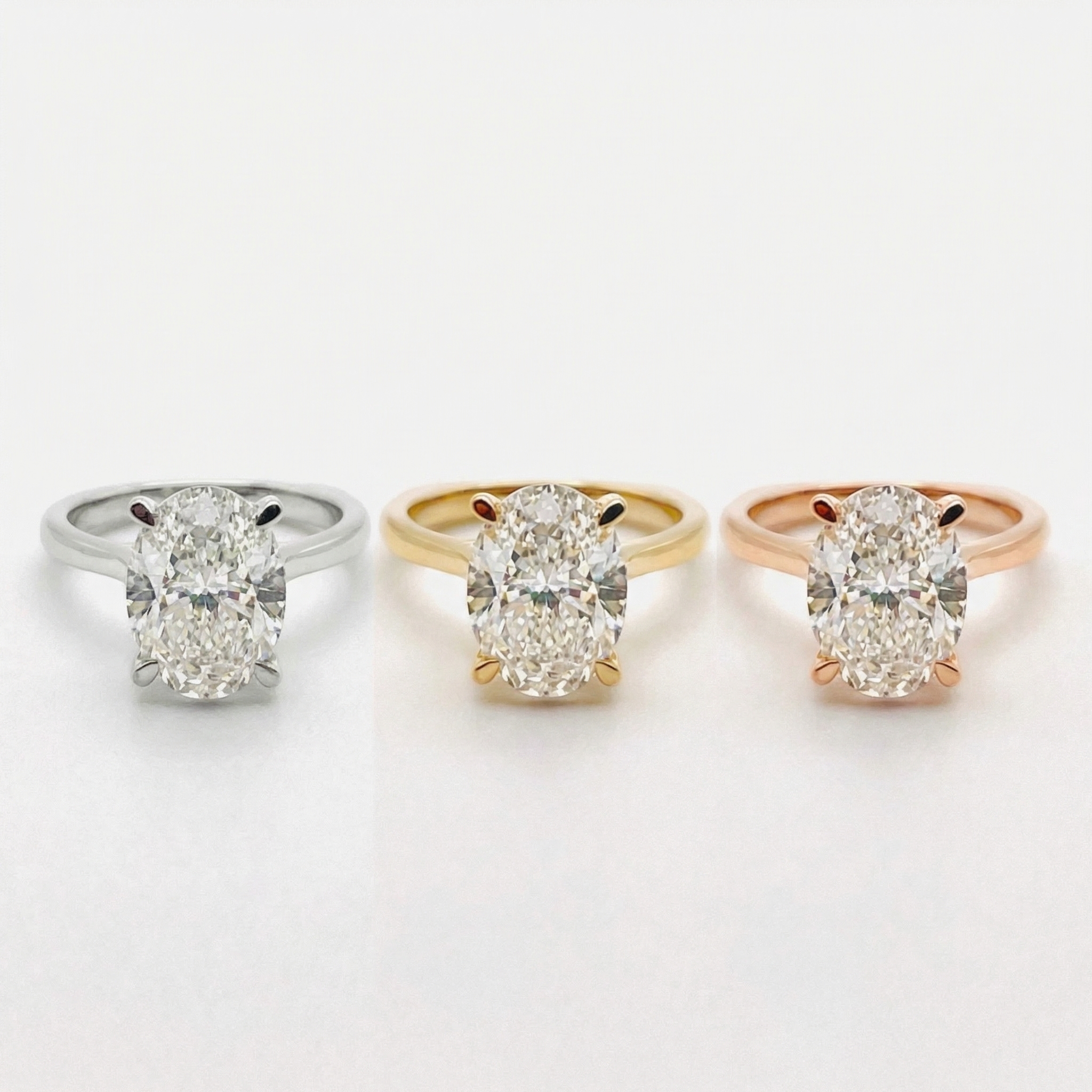
If you’ve started planning a custom fine jewelry piece or an engagement ring, you’ve probably hit the question we get asked more than any other at Kalakari: white, yellow, or rose gold?
This guide breaks down the decision from a made-to-order perspective. Rather than a retail comparison, we’ll walk through how each metal behaves in a custom piece, how it ages with everyday wear, and how to choose based on your center stone, skin tone, and lifestyle. Guidelines like the FTC Jewelry Guides (16 CFR Part 23) define gold purity by karat, but leave alloy composition — which determines color and performance — up to the jeweler.
At Kalakari, every custom piece starts with this decision. Understanding the colors and what each requires over time helps you choose not just what looks right, but what wears right.
Key Takeaways
- All three are real gold. Karat determines purity; alloy determines color.
- White gold requires maintenance. Rhodium plating needs renewal every 1–3 years ($50–$150); yellow and rose gold do not.
- Rose gold is marginally the most durable due to its higher copper content.
- White gold suits colorless diamonds (D–F) best; yellow or rose gold suits warmer stone grades. Skin tone also plays a significant role.
- Gold color does not materially affect price at the same karat.
What’s the Difference Between White, Yellow, and Rose Gold?
White, yellow, and rose gold are all real gold. The difference comes from the metals mixed into the alloy: yellow gold retains gold’s natural warm color; white gold is mixed with palladium or nickel and coated with rhodium for a bright white finish; rose gold contains more copper, producing a pink tone. At the same karat, all three contain the same amount of pure gold. The alloy determines color, not purity.
The alloy also makes jewelry wearable. Pure gold (24k) is a warm, deep yellow by nature — but too soft for daily-wear jewelry. It bends, scratches, and deforms under normal use. Alloying adds the hardness and structural integrity that fine jewelry requires.
This is what each alloy typically contains at 14k:
| Color | Alloy composition (14k) | Color source |
|---|---|---|
| Yellow gold | ~58% gold, ~29% copper, ~12% silver | Copper and silver retain gold’s natural tone |
| White gold | ~58% gold, ~25–32% palladium or nickel, remaining silver/zinc | Palladium or nickel neutralizes gold’s yellow |
| Rose gold | ~58% gold, ~37–41% copper, small silver | High copper content creates the pink tone |
The karat (and the gold content it represents) is identical across all three. What you’re choosing when you choose a gold color is the alloy composition — not the gold content.
One note: while alloy defines the color, karat shapes how prominently it shows. Because 14k contains more alloy relative to pure gold, tones appear richer — making 14k rose gold visibly pinker than 18k. For a deeper breakdown of how karat affects purity, durability, and cost, see our guide to gold karats.
Yellow Gold: Classic Look, Natural Color, Zero Maintenance
Yes. Yellow gold is an alloy of pure gold mixed with silver and copper. At 14k, it contains 58.3% pure gold. The alloy improves strength and durability while preserving gold’s natural warm color.
Yellow gold is the closest representation of gold in its natural state. Pure gold (24k) is deep yellow but too soft for everyday wear, so it is alloyed to create a more durable metal while maintaining its signature warmth.
What gives yellow gold its color
Yellow gold’s color comes from the balance of gold, silver, and copper in the alloy. Unlike white gold, it does not rely on plating or surface treatments. The color is uniform throughout the metal — it will not change with wear.
How yellow gold wears over time
Because there is no plating, yellow gold requires no periodic resurfacing. Over time, fine surface scratches diffuse light differently, creating a softer, slightly darker appearance known as a patina — which deepens the tone gradually without altering the color. This effect can be reversed with professional polishing, though many prefer the quality it develops over years.
Alloy and skin considerations
Yellow gold is generally well tolerated and rarely causes irritation, especially compared to nickel-alloyed white gold. Most modern formulations balance durability with skin compatibility; copper and silver are among the least reactive alloy metals used in fine jewelry.
Best diamond and gemstone pairings
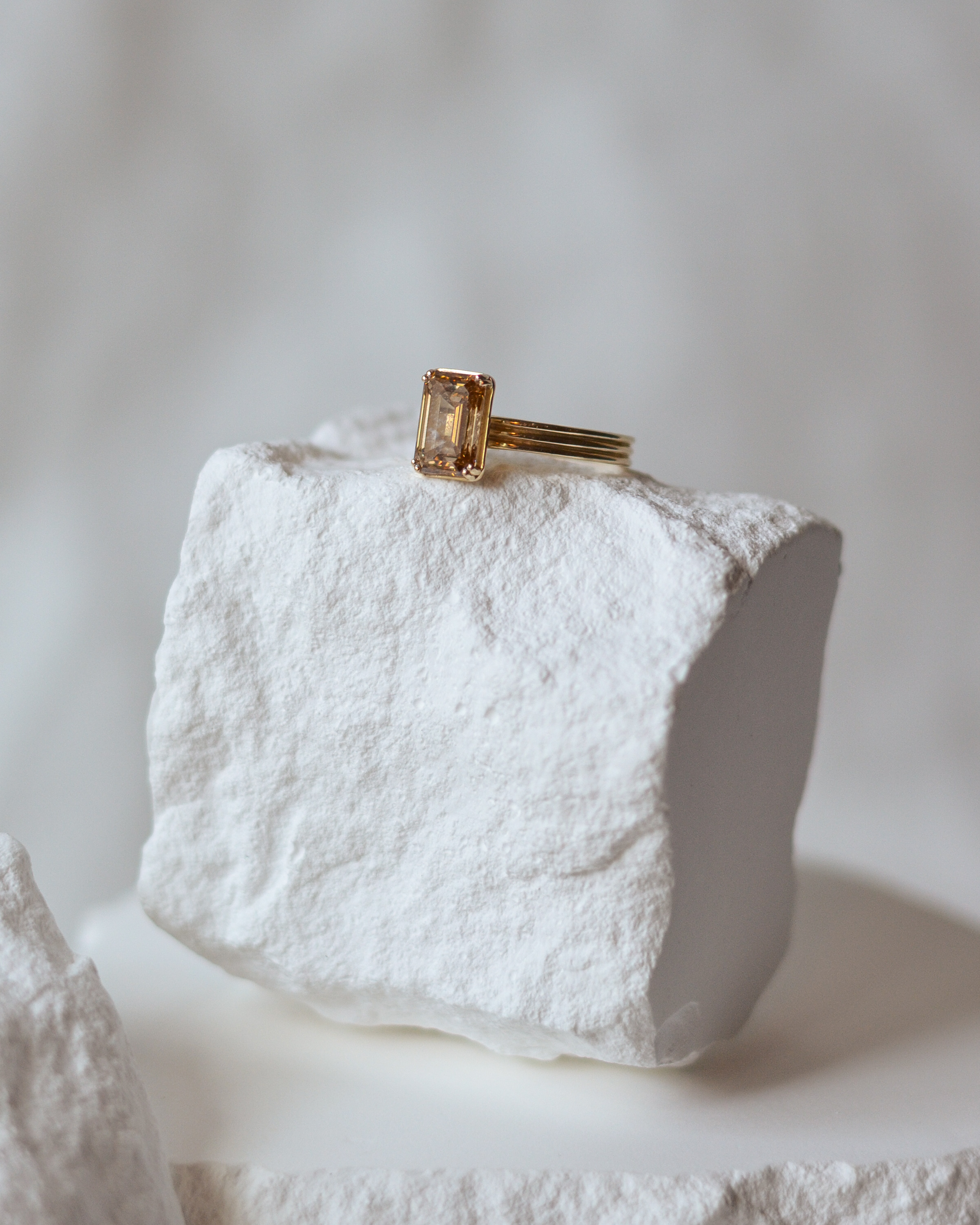
Yellow gold reflects a warmer tone into adjacent stones. It pairs particularly well with near-colorless to faintly warm diamonds (G–J on the GIA color scale), where the added warmth complements the stone’s undertones. Saturated colored gemstones — emeralds, rubies, sapphires — sit naturally in yellow gold. We also often see it paired with oval, marquise, or pear-shaped stones, which amplify the timeless quality of the metal.
- Color source: Intrinsic alloy color, no plating
- Maintenance: Cleaning only; no replating required
- Wear over time: Develops a soft patina from surface wear; polish restores original finish
- Durability: Softer than white gold, but highly workable and resilient
- Stone pairing: Complements warmer diamonds (G–J) and colored stones. Yellow gold is growing rapidly in popularity — 39% of couples now choose yellow gold, a figure that has doubled in five years (National Jeweler)
White Gold: Bright White Look, Higher Maintenance
Yes. White gold is made by alloying pure gold with white metals such as nickel or palladium. At 14k, it contains 58.3% pure gold — the same as yellow or rose gold at 14k. Its bright white appearance comes from a rhodium plating applied to the surface, not from the gold content itself.
White gold is engineered to appear bright and reflective — similar to platinum — but its final appearance depends heavily on surface finishing rather than the base alloy. Understanding what the rhodium coating is, and what happens when it wears, is the most important thing to know about this metal.
What gives white gold its color
The underlying alloy of white gold is a muted grey-white on its own. The bright, mirror-like finish comes from rhodium plating — a member of the platinum metal group known for its high reflectivity and corrosion resistance. The rhodium is what most people associate with the “white gold” look.
How white gold wears over time
Rhodium plating is extremely thin (typically 0.1–0.5 microns) and gradually wears away through contact with skin, surfaces, and daily friction over 1–3 years. Signs of wear are most noticeable on the inner shank of rings and along high-contact edges. As the plating thins, the slightly warmer tone of the base alloy becomes visible. Replating fully restores the original appearance; in our experience, the service typically costs $50–$150 and takes one to two business days at most jewelers.
Alloy and skin considerations
White gold alloys vary significantly in composition, and the choice matters:
- Nickel-alloyed white gold is harder, less expensive to produce, and the most common in mass-market jewelry. Roughly 20% of people have a nickel sensitivity (American Academy of Dermatology), making nickel-alloyed white gold the most likely of the three metals to cause skin reactions.
- Palladium-alloyed white gold is hypoallergenic and generally considered a premium formulation. It costs more due to palladium’s price, but is the right choice for anyone with nickel sensitivity. When commissioning a white gold piece, it’s worth specifying which alloy you want.
Best diamond and gemstone pairings
White gold provides a neutral, highly reflective backdrop that does not add warmth to a diamond — which is exactly what you want for colorless stones. It is the best metal choice for D–F color grade diamonds, where maintaining the stone’s exceptional neutrality is the goal. Diamond shapes with sharp faceting or step cuts — round brilliant, princess, and emerald cut — rely heavily on light return, and white gold’s reflectivity enhances this.
- Color source: Rhodium plating over a white alloy base
- Maintenance: Replating every 1–3 years; $50–$150 per service
- Wear over time: Plating wears first in high-contact areas; replating restores it fully
- Skin sensitivity: Nickel can trigger contact dermatitis; specify palladium-alloyed if sensitive
- Durability: Generally harder than yellow gold due to alloy metals
- Stone pairing: Best for colorless diamonds (D–F); closest analog to platinum at lower cost
Rose Gold: Warm Pink Tone, Low Maintenance
No. Rose gold’s color comes from the copper in the alloy — it’s not a coating, so there’s nothing to wear off. Over years of wear the copper may patina slightly, deepening the hue, but it does not fade the way rhodium-plated white gold can show wear. Professional polishing can reset the surface tone if desired.
What gives rose gold its color
The pink hue comes from copper mixed into the gold alloy at a higher proportion than in yellow gold. Higher copper content produces a deeper, more saturated rose-red tone; higher gold content (18k vs 14k) produces a softer, more subtle pink, because there is proportionally less copper in the alloy.
How rose gold wears over time
Because its color is intrinsic to the metal, rose gold requires no plating and no color maintenance. Over time, copper in the alloy may develop a slightly richer patina from oxidation — typically subtle and considered by most wearers to be an asset rather than a flaw. The color will read the same 20 years from now as it does today. Rose gold’s copper-heavy alloy also makes it modestly harder than yellow gold; copper is harder than silver, giving rose gold a slight durability advantage at equivalent karats. In everyday wear the practical difference is minor but real.
Alloy and skin considerations
Rose gold is typically nickel-free, making it a good choice for anyone avoiding nickel. However, copper sensitivity can occur in a small number of wearers — approximately 4% of people have a copper allergy (NCBI, PMID 25098945). If you’ve worn copper jewelry before without issue, rose gold is unlikely to cause a reaction.
Best diamond and gemstone pairings
Rose gold adds warmth to any stone it surrounds. It pairs especially well with near-colorless to slightly warm diamonds (G–K on the GIA color scale) and enhances colored stones that share its warm palette: morganite, pink sapphire, and champagne diamond are all natural partners.
At higher purities like 18k, gold and copper don’t always form a perfectly uniform internal structure. On a microscopic level, they can create subtle internal zones that don’t bond as strongly — which can make rose gold slightly more prone to cracking during resizing, stone setting, or repairs if not handled with precision. This requires tighter control over heating and cooling during production, and specific solders that differ from those used for yellow or white gold. It’s not a reason to avoid rose gold, but it’s why it matters to work with a jeweler experienced with the metal.
- Color source: Intrinsic alloy color; no plating, no color maintenance
- Maintenance: Cleaning only; polish restores surface tone if desired
- Wear over time: May develop a slightly deeper, warmer patina over years
- Durability: Modestly harder than yellow gold due to higher copper content
- Stone pairings: Best for warm-toned stones and warmer diamond grades (G–K)
Which Gold Color Pairs Best with Diamonds?
The interaction between metal color and diamond color grade is real and visible. A warm metal (yellow or rose gold) reflects warmth up through the stone; a neutral metal (white gold, platinum) doesn’t. This matters most at the extremes of the color scale.
| Diamond color grade | Best metal pairing | Why |
|---|---|---|
| D–F (colorless) | White gold or platinum | Preserves the stone’s exceptional neutrality; warm metal adds a cast some find undesirable at this grade |
| G–J (near-colorless) | Any metal works | The most popular grades; white gold reads cleanest, but yellow and rose complement the slight warmth naturally |
| K–M (faint yellow) | Yellow or rose gold | Warm metal absorbs the stone’s warmth rather than contrasting it; a white metal setting highlights the difference |
| Champagne / fancy color | Match the metal to the hue | Rose gold and champagne diamonds are a particularly striking combination; warm metals amplify fancy color |
This is one of the highest-impact decisions in custom jewelry design — and one that rarely comes up when buying a finished piece from a display case. When you’re designing from scratch, you can optimize the metal color for the exact stone you’ve chosen.
Choosing a Gold Color for Your Skin Tone
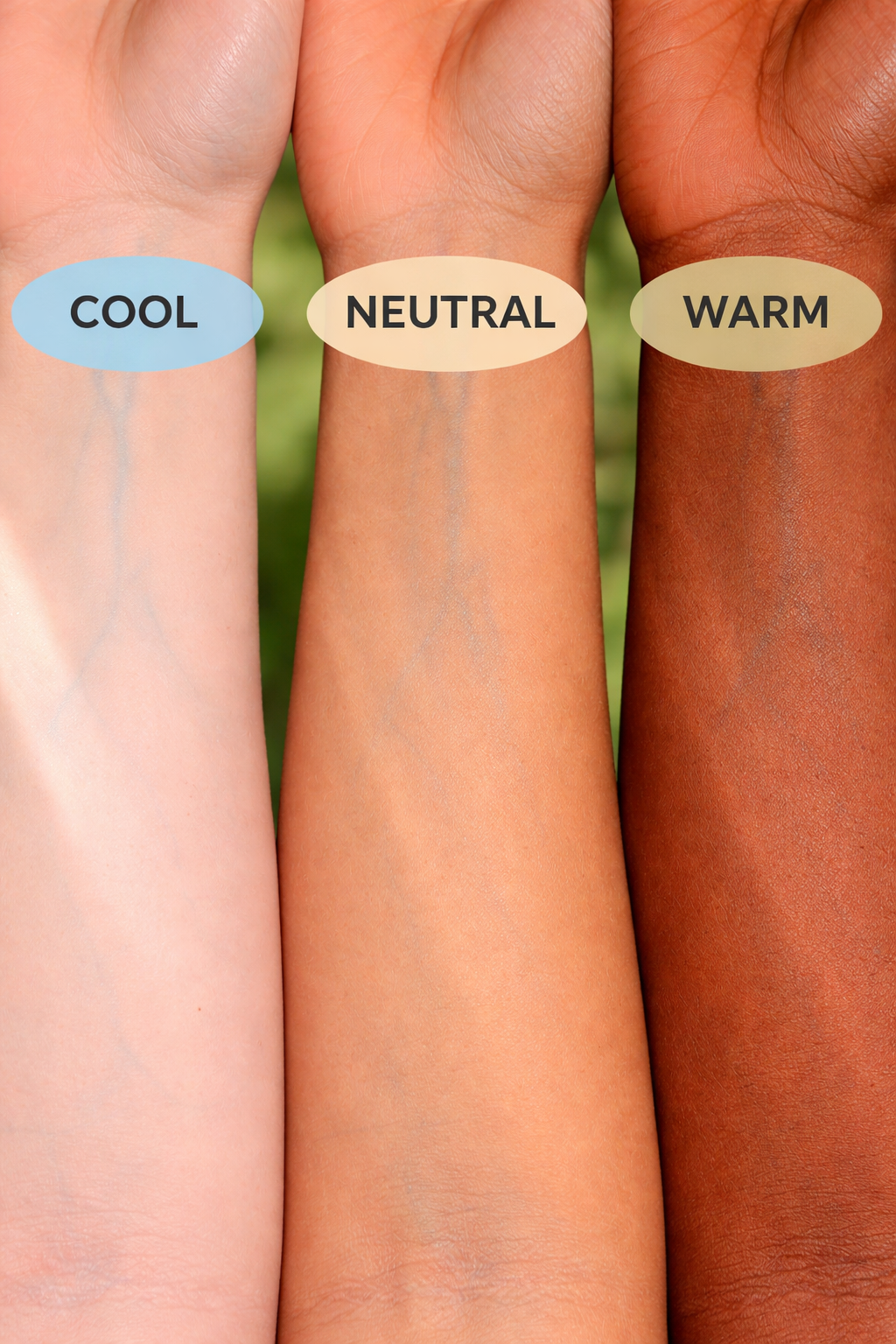
There’s no absolute rule here. Personal preference is the most important factor. If you’re undecided, matching the gold tone to your skin’s undertone is a useful starting point — but tendencies, not rules.
- Warm undertones (golden, peachy, olive, deeper complexions): Yellow and rose gold work well. Rose gold in particular picks up on the warm undertones in olive and deeper skin, creating a natural continuation of the skin’s own warmth.
- Cool undertones (pink, bluish, pale beige): White gold complements cool-toned skin, adding subtle contrast that flatters without competing with the skin’s coolness.
- Neutral undertones: Any metal works equally well.
A quick way to check: look at the veins on the inside of your wrist in natural light. Blue or purple veins typically indicate cool undertones; green veins indicate warm undertones. If you see both, your undertones are likely neutral.
If you’re still unsure, think about what you already wear. The most reliable rule is to match the metal to the other jewelry in your wardrobe — coherence reads as intentional.
Is There a Price Difference Between Gold Colors?
At the same karat, yellow, white, and rose gold are priced comparably in raw material cost. The alloys (copper, palladium, silver) are a small fraction of the total cost relative to the gold content itself. The World Gold Council tracks gold pricing per troy ounce globally; alloy additions don’t meaningfully move the material cost of a finished piece.
There are two real cost considerations:
- White gold manufacturing premium: The rhodium plating step adds roughly $50–$150 to the finished piece — typically a one-time cost at manufacture.
- Long-term replating for white gold: Plan for $50–$150 per replating service, roughly every one to three years. Over ten years of daily wear, that’s $200–$600 in additional maintenance costs that yellow and rose gold don’t carry.
- Palladium-alloyed white gold: If palladium-alloyed white gold is specified (rather than the more common nickel-alloyed), there may be a modest raw material premium; palladium is significantly more expensive than nickel. On most custom pieces, this is minor relative to total piece cost.
If you’re weighing 14k vs. 18k alongside color, those decisions interact: karat choice affects material cost more meaningfully than color choice. Our guide to gold karats covers that decision in full.
How to Choose When Designing a Custom Piece
| Metal | Color | Maintenance | Best for |
|---|---|---|---|
| Yellow gold | Warm golden tone; permanent | Cleaning only | Classic look, low-maintenance lifestyle, warm stone grades |
| White gold | Bright white (rhodium); shows wear over time | Replating every 1–3 yrs | Modern look, colorless diamonds (D–F), platinum aesthetic at lower cost |
| Rose gold | Warm pink-copper; deepens slightly with age | Cleaning only (polish if desired) | Distinctive style, warm skin tones, most durable alloy |
The practical decision framework:
- If you work with your hands, exercise with your jewelry on, or want to minimize maintenance: yellow or rose gold. No plating to wear off. Honest aging.
- If you want a clean, modern look or are prioritizing a colorless diamond’s neutrality: white gold. Plan for periodic rhodium replating as part of routine care.
- If you have nickel sensitivity: yellow gold, rose gold, or palladium-alloyed white gold. Standard nickel-alloyed white gold is the most likely to cause reactions.
- If you’re designing a matching engagement ring and wedding band: decide the metal color before finalizing either piece. Matching is more cohesive; mixing colors can look intentional if done deliberately, but requires planning.
- If you’re genuinely undecided: yellow gold at 14k or 18k is the most forgiving choice — no maintenance beyond cleaning, natural aging, and compatibility with the widest range of stone colors.
At Kalakari, all three gold colors are available in both 14k and 18k. When you reach the metal selection stage of your custom piece, we walk through how your specific stone, design, and lifestyle interact with each option, so the decision is grounded in your piece rather than general advice. If you’re ready to start, reach out to start your piece.
From our experience designing custom pieces
At Kalakari, most of our clients lean toward yellow gold now — its warm finish, minimal maintenance, and timeless character make it a strong fit, especially for engagement rings. Clients who travel often, work with their hands, or simply don’t want to think about their jewelry tend to find it the most natural long-term choice.
Yellow gold also pairs exceptionally well with emeralds and rubies, which have become increasingly popular as center and accent stones. And we’ve seen a shift away from the conventional rule that cooler stones need white metals — some clients are deliberately pairing cooler-toned stones with yellow gold for contrast-driven designs that feel fresh rather than traditional.
- White gold: Common for engagement rings, particularly with colorless or near-colorless diamonds
- Yellow gold: Growing fast, especially for vintage-inspired styles, signet rings, and clients who grew up wearing yellow gold
- Rose gold: A smaller but very loyal following; clients who choose it rarely reconsider
Other Gold Colors: Champagne, Peach, Green, and Black Gold
Beyond yellow, white, and rose, gold can be alloyed or treated to produce a range of other colors. These are less common in fine jewelry but worth knowing about.
Champagne gold
A lower copper ratio than rose gold produces a softer, more muted blush tone with a subtle golden warmth. Champagne gold sits between yellow and rose on the warmth spectrum, leaning closer to yellow with just a hint of pink. The distinction from rose gold is alloy proportion, not a fundamentally different metal. Champagne gold appears frequently as a standard option at large fashion houses.
Peach gold
Peach gold uses a slightly higher copper ratio than champagne gold, creating a soft pink tone still more muted than traditional rose gold. It sits closer to rose on the color spectrum but retains a lighter, more delicate blush appearance. Like champagne gold, peach gold is a variation in alloy composition — small changes in copper percentage shift the tone from warm beige to soft pink, which is why the terms are often used interchangeably.
Green gold
Gold alloyed primarily with silver produces a subtle yellow-green tone historically known as electrum, one of the earliest naturally occurring gold-silver alloys. Rarely used in modern fine jewelry; more common in artistic or specialty pieces where the color contrast is part of the design intent.
Black gold
Not an alloy, but a surface treatment. Standard yellow or white gold is oxidized, plated with black rhodium, or laser-treated to produce a dark surface finish. The underlying metal is ordinary gold; the black is a coating. Maintenance considerations are similar to white gold’s rhodium plating — the treatment can wear in high-contact areas and may need periodic refinishing.
At Kalakari, we primarily work in yellow, white, and rose gold across 14k and 18k. If you have something specific in mind outside these options, reach out — we’re happy to discuss what’s possible.
Frequently Asked Questions
White gold and yellow gold contain the same amount of pure gold at the same karat. The difference is the alloy metals mixed in to create the color. Yellow gold uses copper and silver, preserving gold’s natural warm hue. White gold uses palladium or nickel with silver to produce a pale, cool-toned base, which is then coated with rhodium for a bright white finish. Practically, white gold requires periodic replating as the rhodium wears; yellow gold does not.
Yes, periodically. White gold’s bright white appearance comes from a thin rhodium coating applied to the surface after the piece is finished. With regular wear, this coating thins. Most wearers have it replated every one to three years. The service costs roughly $50–$150 at most jewelers and takes a day or two. Yellow and rose gold have no plating and no equivalent maintenance requirement.
Yes. Rose gold is fine gold alloyed with copper and sometimes small amounts of silver. The proportion of pure gold is identical to yellow or white gold at the same karat; 14k rose gold is 58.3% pure gold regardless of the alloy that produces the pink color. The color is intrinsic to the alloy, not a surface coating.
All three are excellent choices and hold up well with daily wear at 14k or 18k. The practical criteria are your stone’s color grade (white gold works best for colorless diamonds; yellow or rose for warmer color grades), your maintenance preference (white gold requires periodic rhodium replating; yellow and rose do not), and personal preference on aesthetics. For most buyers the decision comes down to lifestyle and the look they want to wear every day.
Not meaningfully at the same karat. White gold typically carries a small manufacturing premium for the rhodium plating step, usually $50–$150 on a finished ring. The more significant long-term cost factor is periodic replating for white gold ($50–$150 per service, roughly every one to three years), which yellow and rose gold do not require. Karat choice affects cost more than color choice.
Yellow and rose gold tend to complement warm skin tones: golden, peachy, olive, and deeper complexions. Rose gold particularly picks up on the warm undertones in olive and deeper skin. White gold, with its cooler silver tone, typically reads better against cool or neutral undertones. These are tendencies rather than rules, and personal preference often matters more.
White gold looks very similar to silver and platinum, especially when rhodium plated. The rhodium coating gives white gold a bright, mirror-like finish that reads as white or silver to the eye. The key difference from silver is that white gold doesn’t tarnish the way silver does; it requires periodic replating as the rhodium wears, but it won’t darken or blacken under normal wear. The difference from platinum is primarily price; platinum is a heavier, denser metal that maintains its white color without plating.
Rose gold is marginally the most durable of the three, due to its higher copper content; copper is harder than the silver used in yellow gold alloys, giving rose gold a slight hardness advantage at equivalent karats. In practical daily wear, however, the differences between yellow, white, and rose gold at the same karat are minor. All three hold up well for decades with normal care. Durability alone should not be the primary driver of the metal color decision.
Yes, and it can look intentional when done deliberately. Mixing gold colors (wearing a white gold engagement ring alongside a yellow gold wedding band, for example) works well when the contrast is purposeful rather than accidental. If you’re designing a matching set, the cleaner choice is to match the metal across both pieces. If you already own jewelry in one color and want to add a piece in another, leaning into the contrast rather than trying to approximate a match tends to look better.
Rose gold does not tarnish the way silver does. Like all gold alloys, it is highly oxidation-resistant. The copper in rose gold can develop a very slight deepening of tone over many years (sometimes described as a warm patina), but this is far more gradual and subtle than the blackening silver experiences. Standard cleaning with warm water and a soft brush is sufficient to maintain rose gold’s appearance; it does not require special storage or anti-tarnish treatment.